archive
Mina Protocol (Thread)
Any blockchain has the problem of sizing. Imagine one blockchain that has a constant size relatively similar to a JPEG.
$MINA’s, previously Coda Protocol, proposition is to build the privacy and security layer of web3 by producing the lightest blockchain.
(source: here)
MINA’s blockchain has a fixed size of 22KB compared to other predominant blockchains – 300GB.
The blockchain is built by zkApps and the SDK is based on Typescript.
Team:
-
@eshap (CEO) co-founder of @o1_labs
-
@itsjoonkim (General Counsel)
-
@sherrylin (Marketing)
Funding:
- Seed Round $15M
@paradigm
@generalcatalyst
@coinbase ventures
@Accomplices
- Venture Round $10.9M
#ThreeArrowsCapital
@BixinVentures
- ICO $18.8M + $92M
@leonhillmann
@zhusu
@PanteraCapital
$FTT Ventures
@FinalityCap
@circlepay
#brevanhoward
@blockchain
@ambergroup_io
Alan Howard
Benefits of using MINA:
-
Self-custodial data
-
Interoperability
-
Connecting to real-world data
-
Every participant is full node
-
Vibrant community
Now, diving into MINA itself!
Thanks to zk-SNARKS, the blockchain is accessible from any device (i.e. mobile phone or PC).
Not only ease of access, but also each block generates a SNARK proof which would be sufficient enough for all nodes to store instead of the entire chain.
@o1_labs formulated their contributions to MINA:
-
Succinct blockchain
-
Approach to constructing a succinct blockchain for generic functionalities through SNARK
-
Concrete implementation of payment system – MINA
-
Ouroboros Samasika → secure PoS based on Cardano’s Ouroboros that is adaptively secure and bootstraps from genesis
-
Performance evaluation report
To summarize, MINA is a succinct blockchain based on recursive SNARKs
The key participants in the network architecture are
-
Verifiers (Node)
-
Block Producers (Stakers)
-
SNARKers (Responsible for taking snapshots)
The transaction flow in MINA is as follows:
-
block producers (BP) select a tx →
-
SNARKers take snapshot and bid to have their snapshot chosen by BP →
-
BP takes the snapshot of all tx snapshot →
-
BP takes snapshot of current blockchain state →
-
sent to verifiers.
This enables MINA to achieve never-before blockchain accomplishment. As an example, find a user’s credit score on dApp without revealing identity.
A block inside MINA is constituted of:
-
Protocol State
-
Protocol State Proof
-
Staged Ledger
-
Delta Transition Chain Proof
-
Current Protocol Version
-
Proposed Protocol Version
MINA doesn’t require a data oracle. It takes the price snapshot from multiple DEX to determine the underlying price.
MINA continues to build more and more mind-blowing applications, such as logging into MINA without revealing email addresses with the help of zk-SNARK.
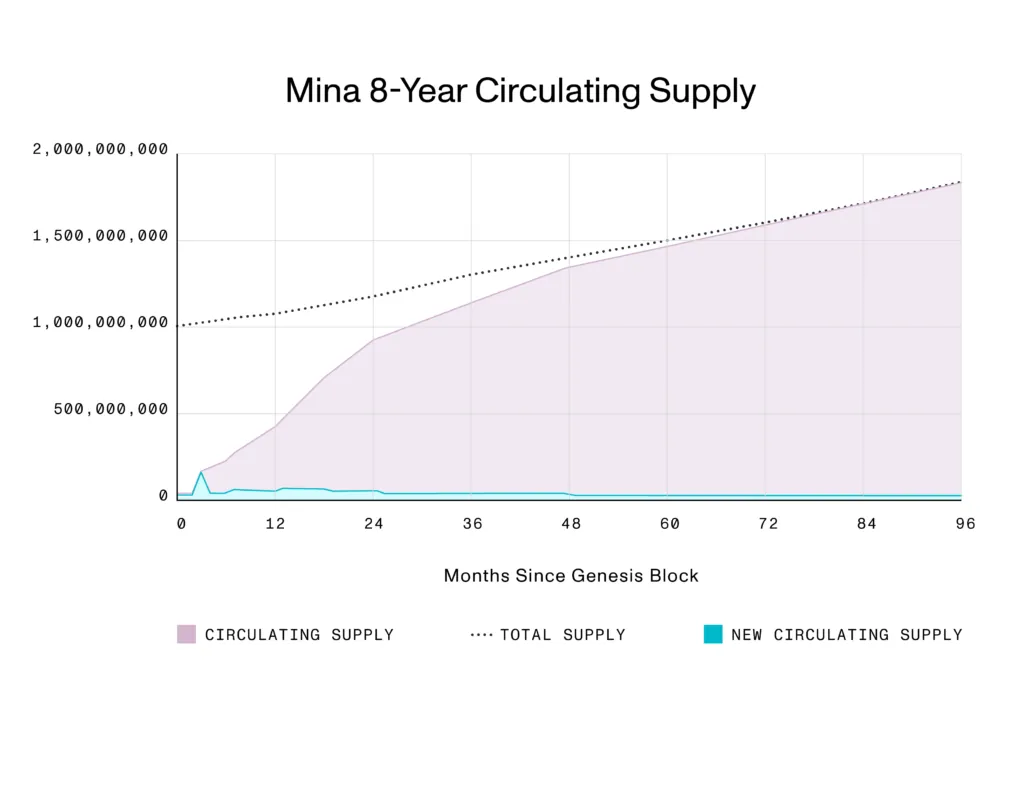
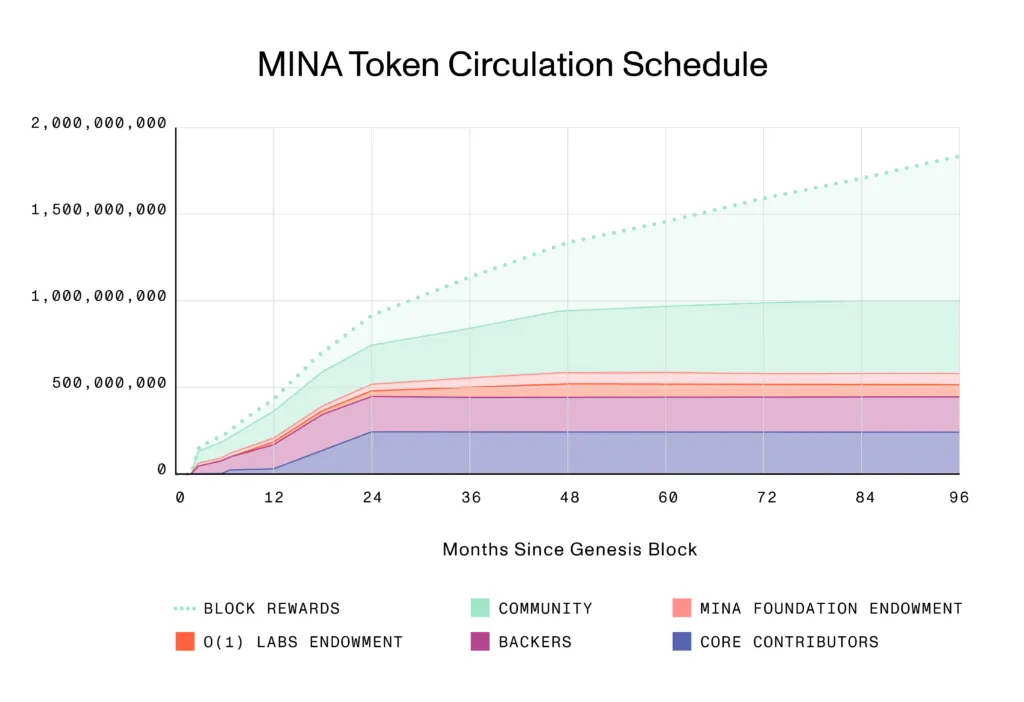
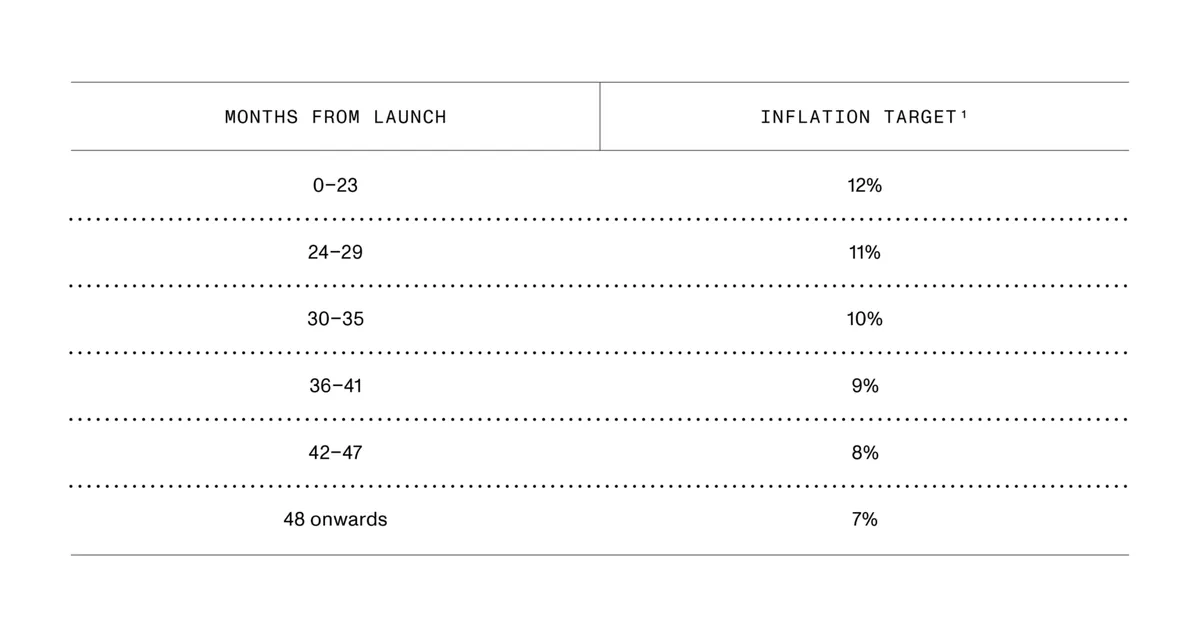
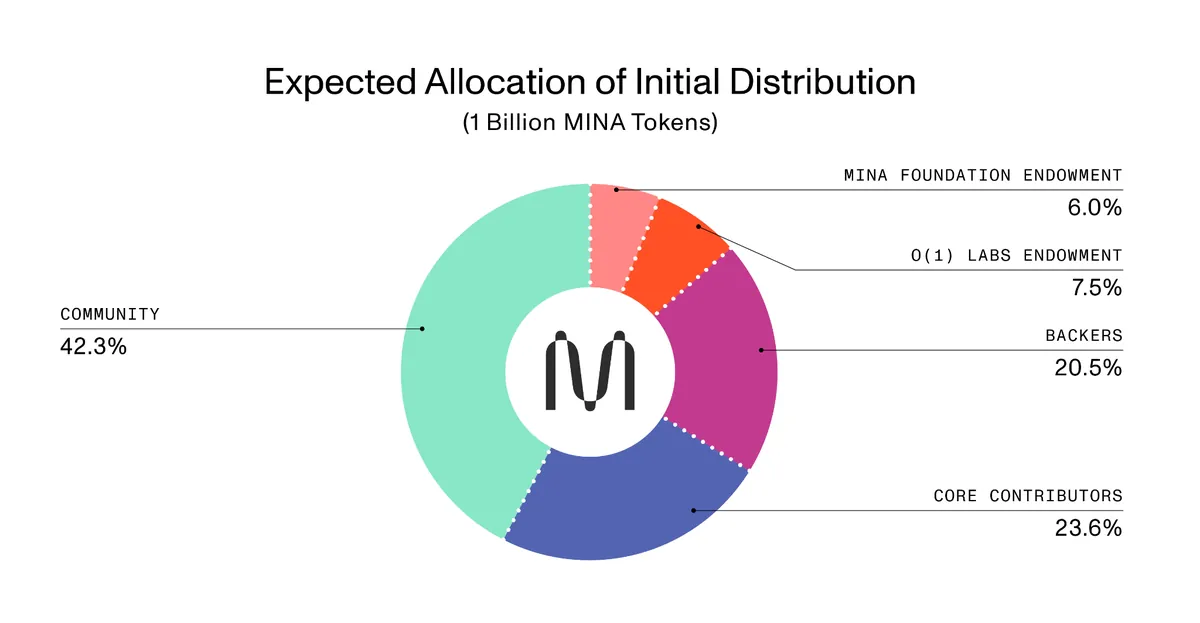
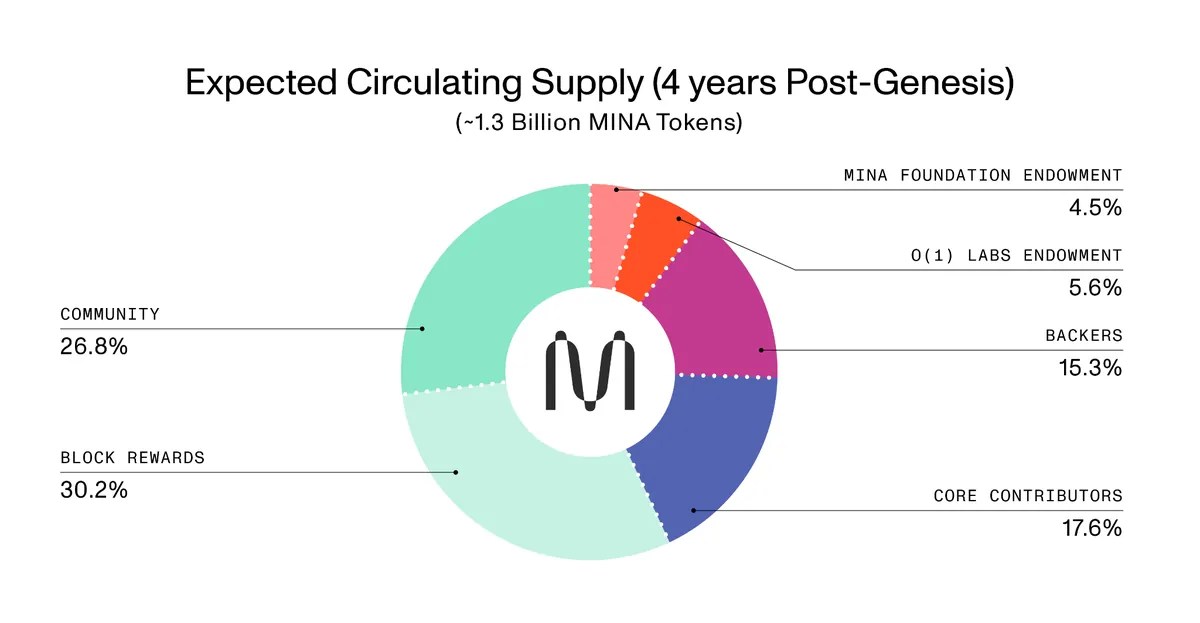
$MINA is the native token of MINA protocol without a supply cap and it is inflationary. The total distributed token at launch is 1B (will be fully unlocked after 8 years).
(source: here)
During TGE, the community has the most amount of token allocation. However, after all the planned supply has been released, most allocations goes to block rewards.
(source: same as above)
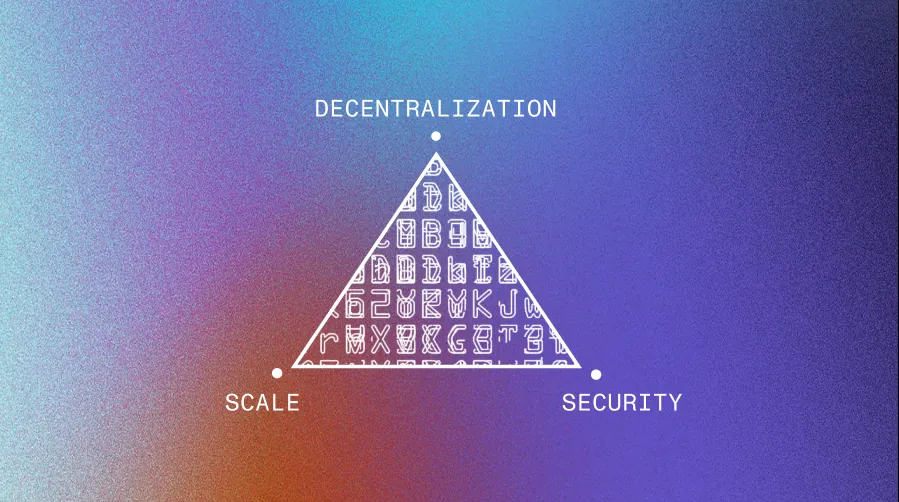
MINA protocol is the game-winner of decentralization. That said, the same can’t be said on scalability and security.
The blockchain could only achieve 22 TPS and it takes 15 block confirmation for a transaction to have 99% finality confidence (roughly 1 hour).
Despite the source code having been thoroughly audited, a question came to mind: if verifiers hold zero knowledge and block producers hold the current state of the network, where does the rest of blockchain history go?
A video by @coinbureau reveals that MINA actually has an unofficial network component – Archives.
The archive nodes store the historical blockchain data. Seems safe right? No. The archiver nodes actually store the historical data on @Google cloud. Where’s the decentralization in this?
Being a smart contract, MINA’s most relevant competitor is $DOT in terms of interoperability.
MINA’s TPS could merely reach 22 TPS whereas DOT could achieve ~166.66 TPS!
Security-wise, MINA has relatively similar amount of block producers with DOT (155 and 297 respectively)
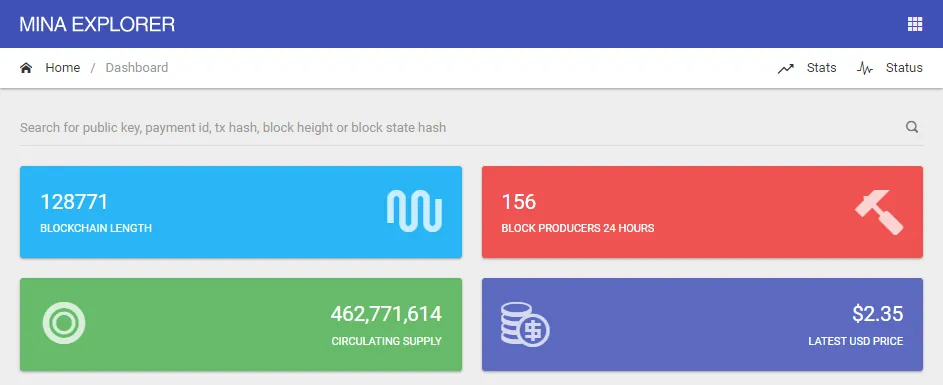
imo MINA wins over DOT in terms of block size and access convenience, though in other features it still needs improvement